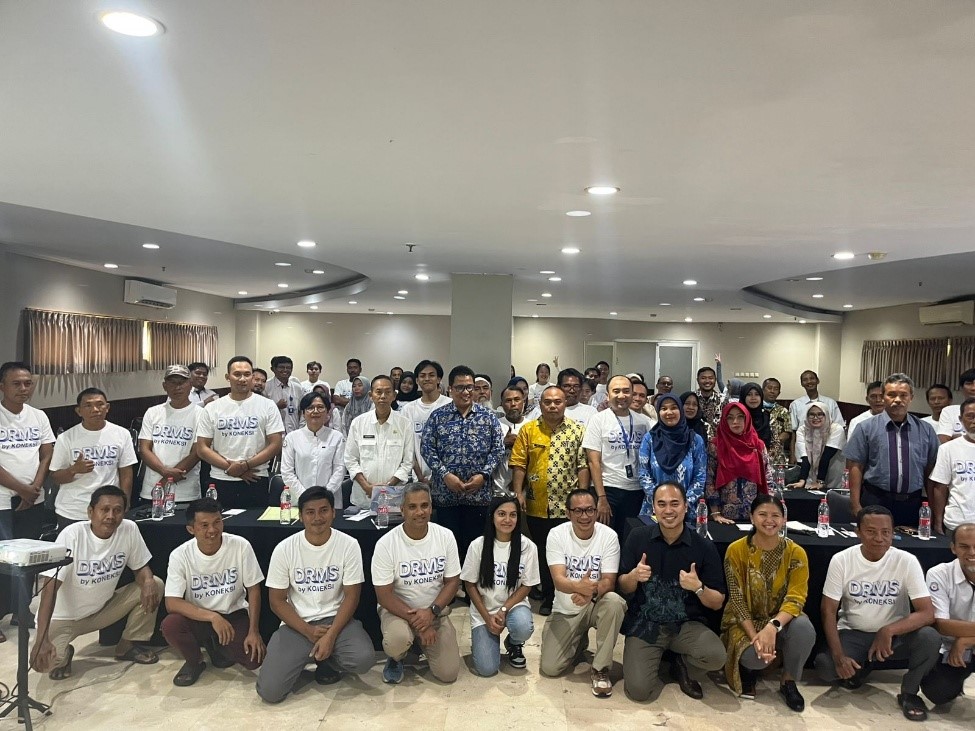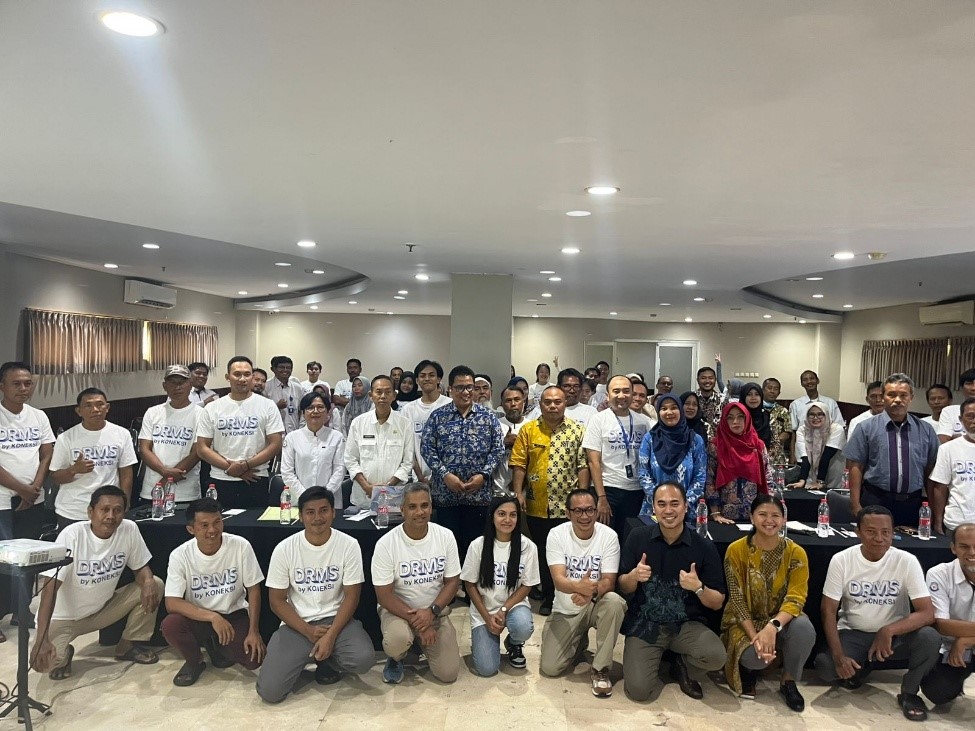
On Thursday, October 23, 2025, the Center for Digital Innovation Studies (DIGITS) of the Faculty of Economics and Business, Padjadjaran University (FEB Unpad) held an event titled “Technology-Based Shrimp Disease Mitigation: The Smartambak Application” at the Sutan Raja Hotel, Cirebon, West Java. The main objective of this event was to introduce Smartambak as an innovative digital solution designed to assist shrimp farmers in early detection and anticipation of potential shrimp diseases. Furthermore, this event served as a forum to gather direct input from shrimp farmers in the Cirebon area regarding the application’s effectiveness and implementation in the field.
The development of this application is part of the KONEKSI collaborative research grant funded by the Australian Government. This research involves collaboration between Padjadjaran University, the University of New South Wales (UNSW) Sydney, the Ministry of Maritime Affairs and Fisheries of the Republic of Indonesia (KKP RI), GENICS, and AIN-SEA. This project also received support from DIGITS Unpad, PSDKU Unpad Pangandaran Campus, and the Australian Government.
The event was opened by drh. Christina Retna Handayani, M.Sc. (Associate Fish Health Manager, Directorate of Brackishwater Fish, Ministry of Maritime Affairs and Fisheries of the Republic of Indonesia), Sudiharjo, S.A.P., M.Pd. (Head of the Food Security and Fisheries Service of Cirebon Regency), and Prof. Hamzah Ritchi (Research Team Leader and Head of DIGITS FEB Unpad), he said, “We will together introduce and explore the use of the Smartambak application on this occasion. We hope that this application can be a starting point in utilizing digital technology to help shrimp farmers face the challenges of shrimp diseases in a more effective and sustainable manner,” he said.
This activity consisted of two main sessions featuring speakers from various institutions. The first session featured Dr. Hendra Yusran Siry, S.Pi., M.Sc., Expert Staff to the Minister for Ecology and Marine Resources at the Ministry of Maritime Affairs and Fisheries of the Republic of Indonesia, moderated by Prof. Alexander M.A. Khan, S.Pi., M.Sc., Ph.D., Director of PSDKU Unpad Pangandaran Campus. This session discussed the topic “Blue Economy and the Challenges of the Shrimp Cultivation Industry.” The second session featured Susi Setiawati, S.E., M.Sc., Head of the Aquaculture Division of the Cirebon Regency Food Security and Fisheries Office, moderated by Prof. Sunu Widianto, S.E., M.Sc., Ph.D., a lecturer at the Faculty of Economics and Business, Unpad, with the topic “Shrimp Cultivation and the Challenges of Shrimp Diseases.”
The event continued with an introduction and simulation of the use of the Smartambak application, guided by Rora Puspita Sari, Ph.D., from the Unpad DIGITS Research Team. In this session, the farmers had the opportunity to directly try out the features of the Smartambak application, which is designed to identify potential shrimp diseases based on the symptoms they report. After the trial, participants actively provided various input to improve the application to better suit real-world needs and conditions. This activity was attended by more than 30 shrimp farmers from various regions in Cirebon, who demonstrated high enthusiasm for the use of digital technology in shrimp farming practices.
Rora explained that this research project has a fundamental commitment to inclusivity. “This research project is fully committed to supporting the provision of inclusive application services for women and small-scale shrimp farmers,” Rora explained. She added that women are a crucial part of the shrimp farming value chain, where they play a crucial role as analysts in detecting common shrimp diseases. “In this research, we involved them from the research and application design stages, as well as the addition and refinement of features that we will implement in the future,” she concluded, emphasizing the importance of comprehensive participation in fisheries technology development.
Through this activity, Smartambak is expected to be a strategic step in driving the digitalization of the shrimp farming sector in Indonesia. The application, which is now available on the Play Store, will continue to be developed and refined based on input and real-world needs, making it more responsive, relevant, and beneficial for shrimp farmers in facing future shrimp disease challenges.