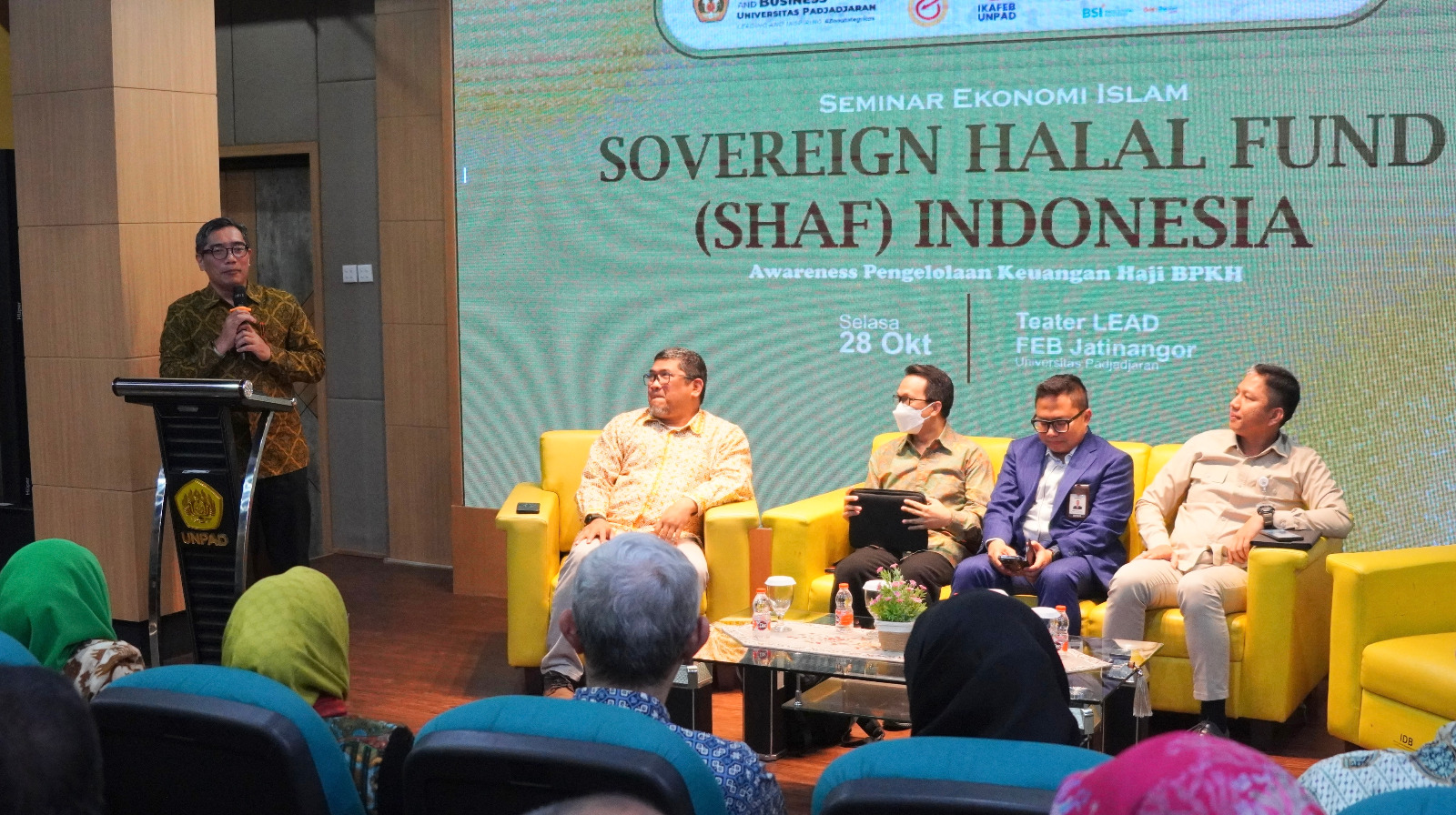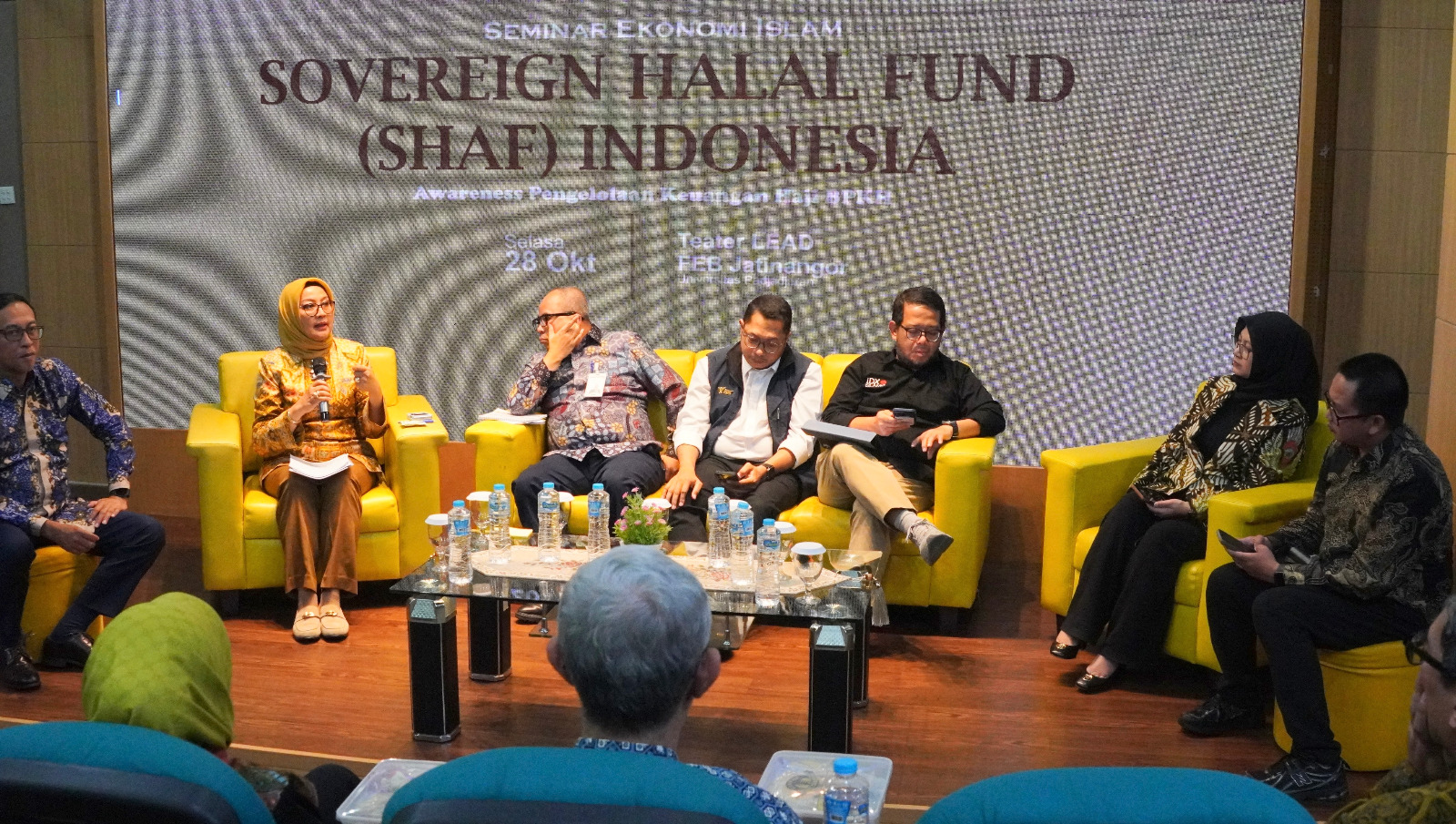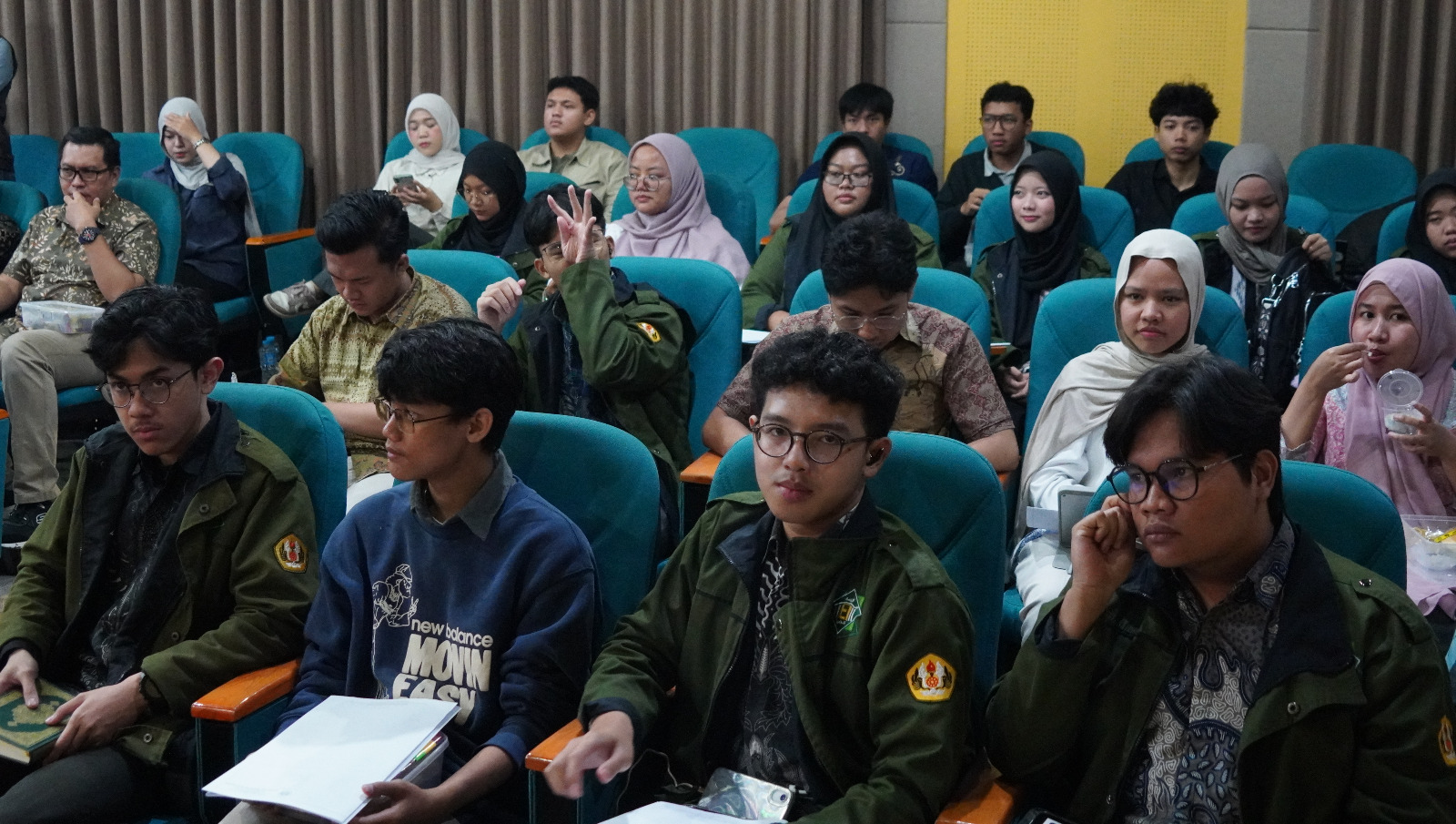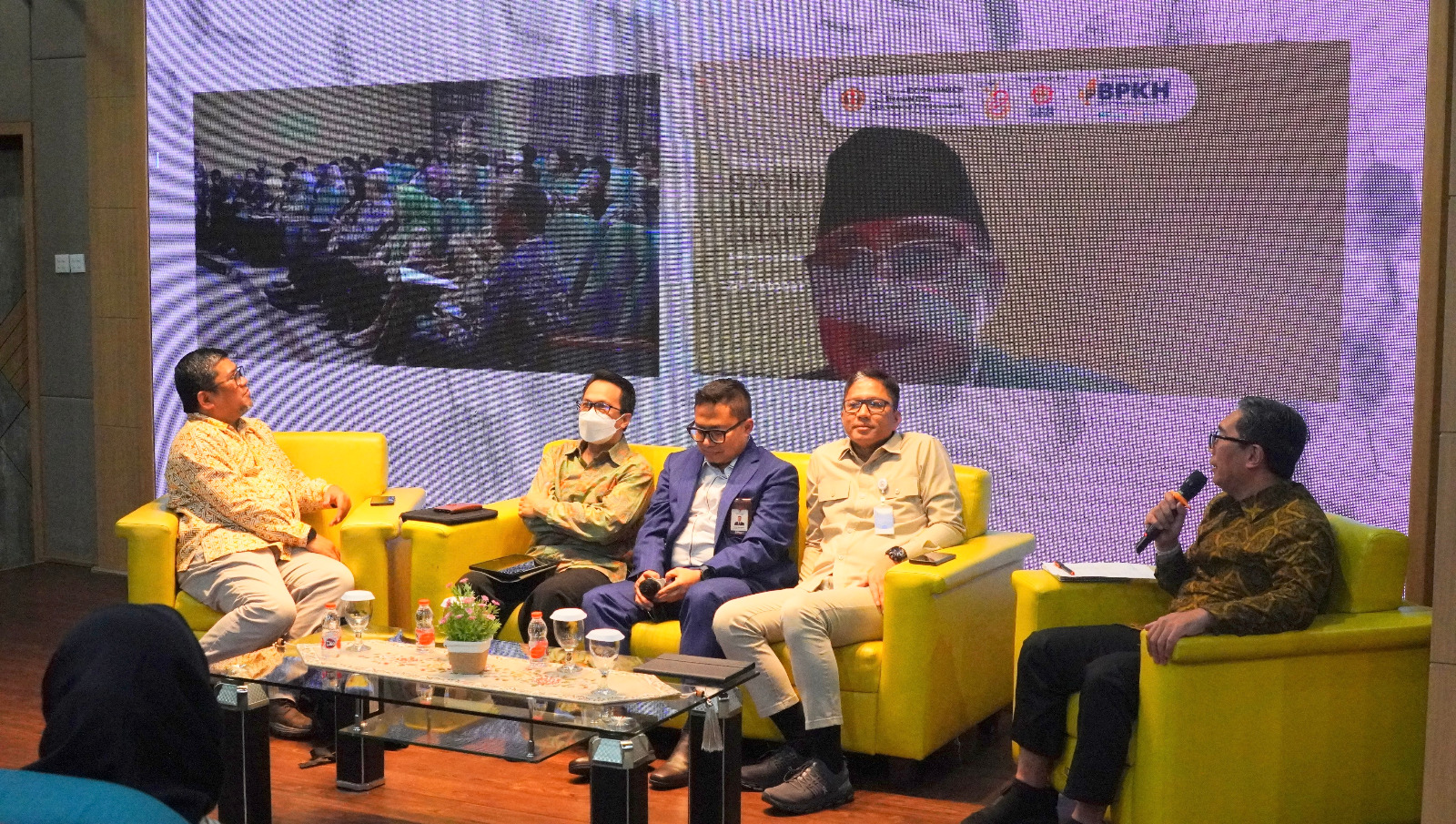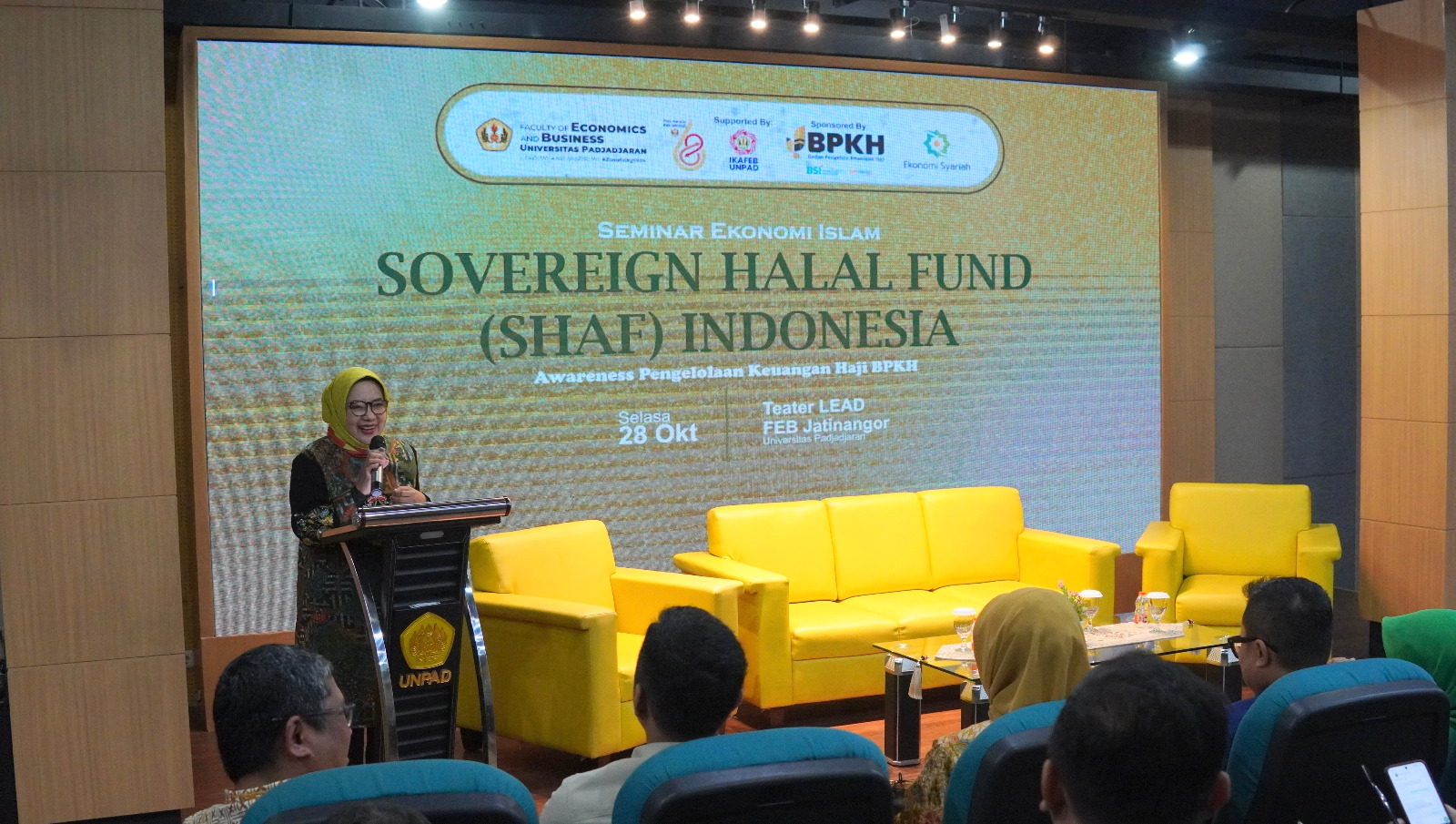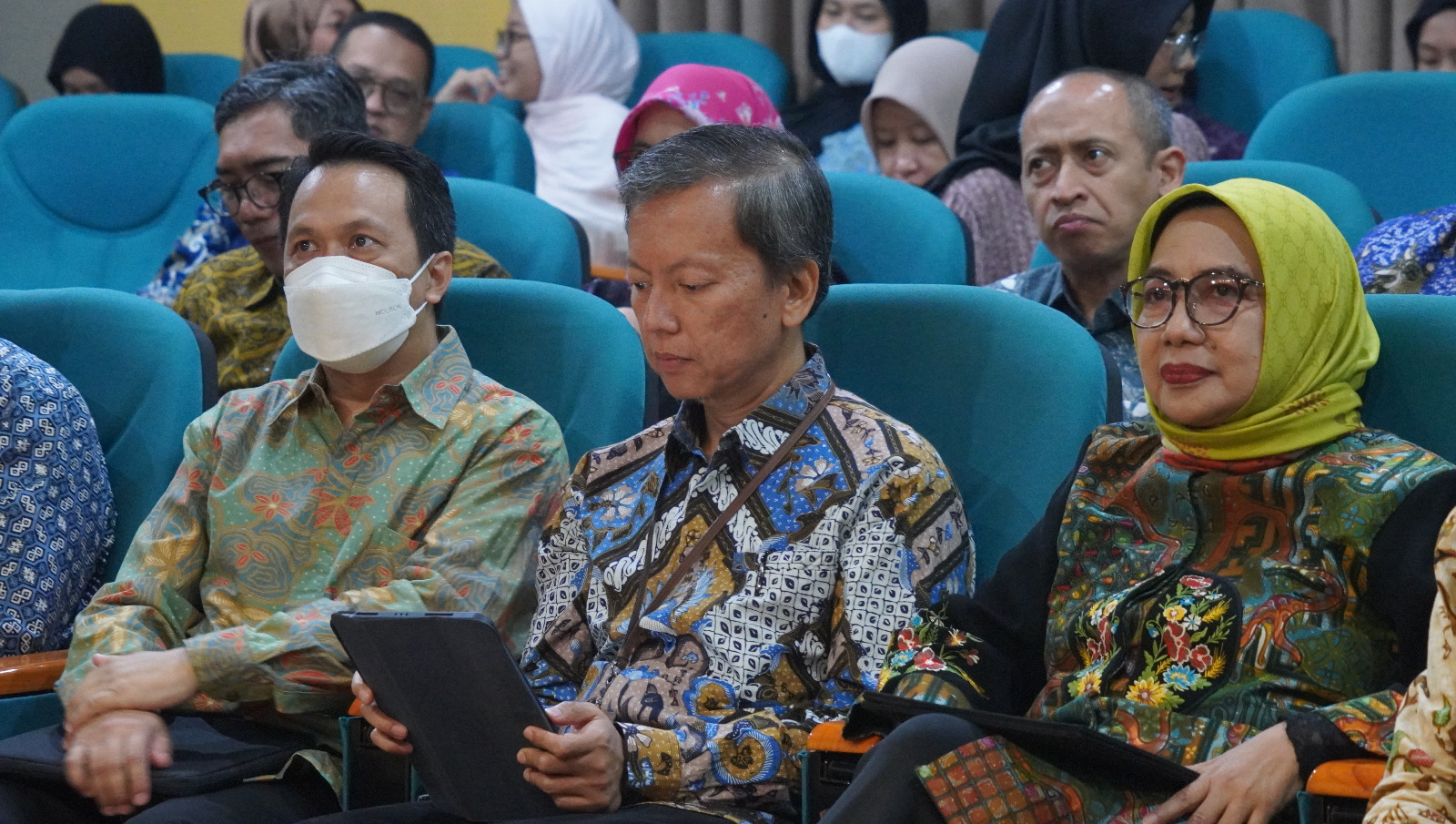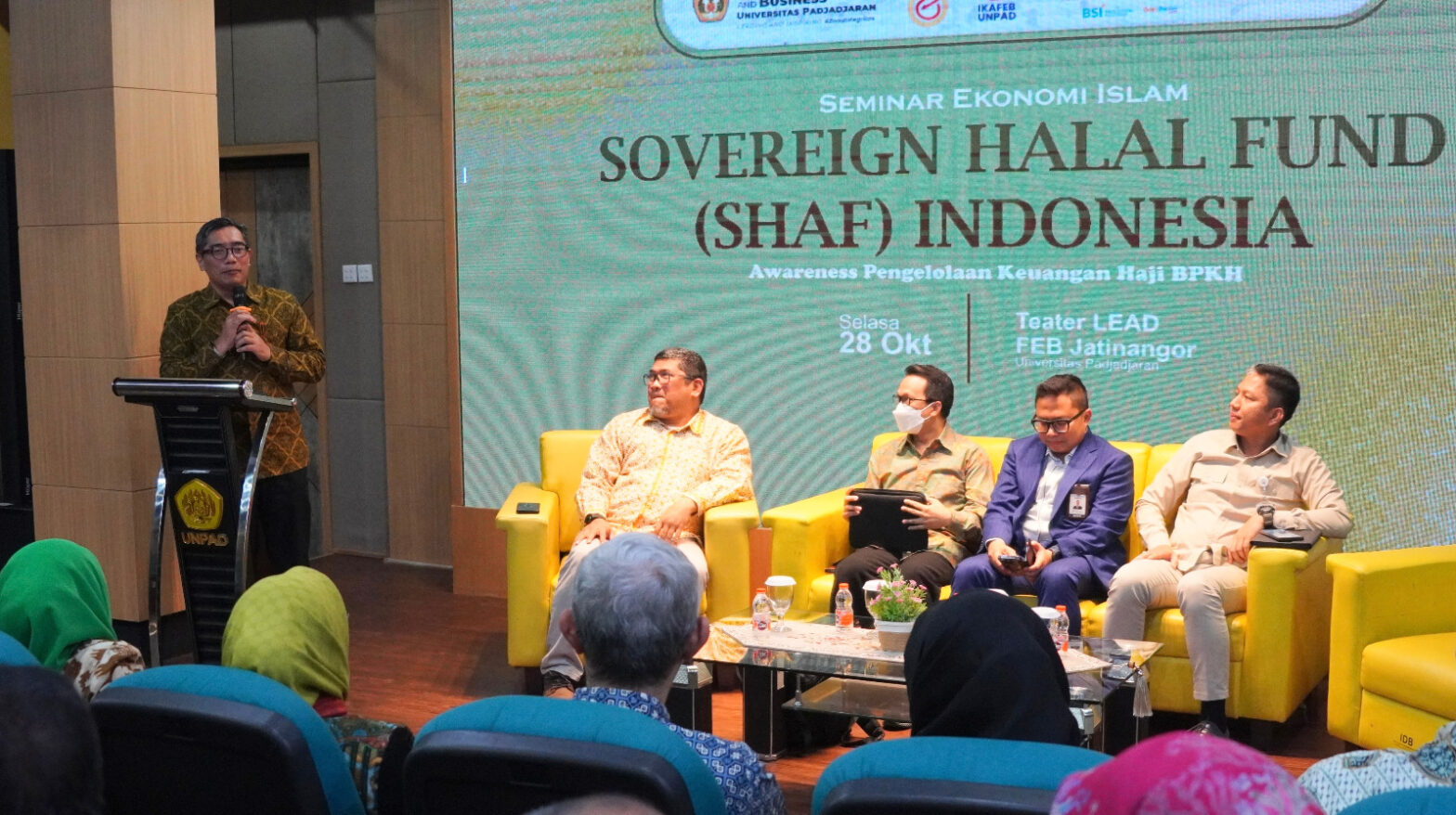
Jatinangor, October 28, 2025 – In commemoration of its 68th Anniversary and Youth Pledge Day, the Faculty of Economics and Business (FEB) of Padjadjaran University (Unpad) held an Islamic Economics Seminar entitled “Sovereign Halal Fund (SHAF) Indonesia: Awareness of BPKH Hajj Financial Management.” This hybrid event attracted 600 participants and aimed to clarify the concept of consolidating halal funds from the community as a driving force for national prosperity, following the government’s previous move to establish Danantara.
Unpad’s Vice Rector for Research, Cooperation, and Marketing, Prof. Rizky Abdulah, S.Si., Apt., Ph.D., in his opening remarks emphasized the relevance of SHAF’s transformational vision. Therefore, he emphasized that the potential of community funds represents a significant economic force that, if managed professionally and productively, can become a driving force for prosperity. In line with this spirit, Unpad recently launched the Padjadjaran University Waqf Institute as a strategic step to manage waqf and endowment funds in a modern, transparent, and beneficial manner for the Tridharma (Three Pillars of Islam).
Meanwhile, the Dean of the Faculty of Economics and Business (FEB) at Padjadjaran University (Unpad), Prof. Dr. Hj. Nunuy Nur Afiah, M.Sc., Ak., highlighted Indonesia’s immense potential as a country with the largest Muslim population, which unfortunately has not been optimally tapped. She mentioned the strong pillars of Islamic finance, such as the Hajj Fund (BPKH), the Zakat Fund (BAZNAS/LAZ), and the Waqf Fund (BWI), which are still operating independently. According to Prof. Nunuy, SHAF exists to address the urgency of consolidating these Sharia-based public funds—including Hajj funds, Waqf, Zakat, Infaq, and Sadaqah—into strategic projects that are not only financially profitable but also beneficial (halal).
As a concrete example of a champion product of halal funds, Dr. Indra Gunawan from the Indonesian Financial and Development Agency (BPKH) pointed to BPKH’s success in contributing to annual Hajj cost discounts for pilgrims while simultaneously supporting the development of infrastructure for the SDGs. According to him, the potential for managing halal funds could reach at least IDR 1,000 trillion. “There is the potential for thousands of trillions of rupiah in halal funds from the community (hajj, waqf, zakat, infaq, and alms) and various other Sovereign Halal Fund (SHAF) sources, which can provide broader benefits through professional management,” he said.
This initiative has received support from various parties. Minister of Cooperatives Ferry Juliantono mentioned the potential contribution of 3,964 KSPPS with total assets reaching IDR 36.3 trillion. Furthermore, Prof. Ilya (Professor of the Faculty of Economics and Business, Padjadjaran University and Commissioner of the Financial Services Authority (OJK) for the 2012–2017 period) assessed that SHAF could become an orchestrator of existing Islamic Social Financial Institutions. Therefore, he emphasized, “SHAF, together with DANANTARA, can become a double engine for the Indonesian economy.” Dr. Ali Sakti, M.Ec (Directorate of Sharia Economics and Finance) also emphasized that “Bank Indonesia and stakeholders are currently discussing this issue, with the goal of channeling community funds into the halal ecosystem and circulating them into investments that drive growth in the real sector.” Moreover, Presidential Advisor for Economics, Prof. Dr. (HC) Ir. Burhanuddin Abdullah, M.A., stated that SHAF has the potential to become an economic accelerator in sectors not managed by the conventional economy.
However, challenges were also highlighted. Irwan Abdallah (Sharia Capital Market Division, IDX) emphasized the need to define the scope of halal funds and their governance. Meanwhile, Firman Djatnika (SEVP Retail and Consumer Risk, BSI) highlighted that managing halal funds is more challenging because it requires increasing competitive returns while maintaining strong governance and Sharia compliance.
Bobby P. Manulang from Dompet Dhuafa added that halal fund management has succeeded in not only channeling funds from muzaki (payers of zakat) to mustahik (payers of mustahik), but can also leverage them if managed professionally. Dompet Dhuafa has successfully combined waqf and zakat funds in collaboration with partners to operate hospitals. Satya Rinaldi then highlighted, “The challenge in developing the Sharia economy is increasing literacy, both financial, digital, and Sharia-compliant.” Finally, Prof. Dian Masyita (Professor of the Faculty of Economics and Business, Padjadjaran University) emphasized that to increase the contribution of the Sharia economy, strengthening the halal industry is essential, as it is the core of stakeholder integration across the halal ecosystem.
This seminar ultimately became a crucial forum for discussion on realizing the vision and management of Islamic funds to promote national prosperity and the sharia economy, while also addressing the challenges of development funding in the Prabowo-Gibran administration.
Report by: Arini R