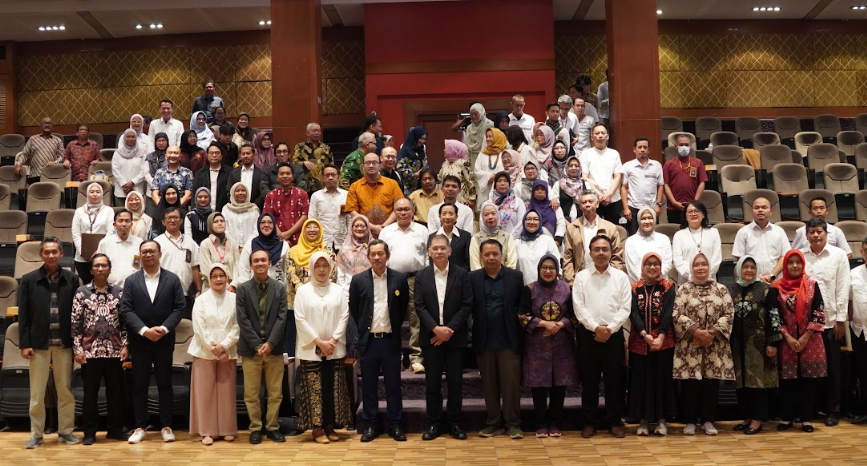
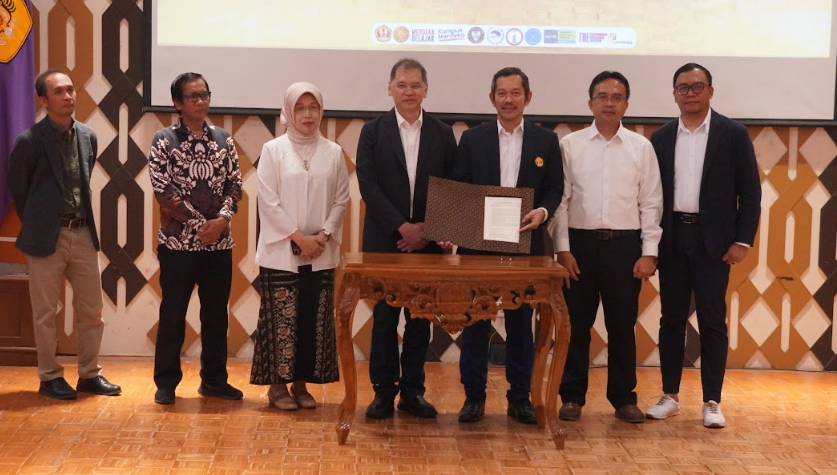
Bandung, February 11, 2026 — The Faculty of Economics and Business, Padjadjaran University (FEB Unpad) firmly strengthened bureaucratic reform by launching the Integrity Zone (ZI) toward a Clean and Serving Bureaucracy Zone (WBBM). The event, held on Tuesday, February 11, 2026, at the Bale Santika Auditorium, was attended by the Chancellor of Padjadjaran University and university leaders, and was attended by the entire FEB Unpad academic community.
The strengthening of the ZI toward WBBM is part of FEB Unpad’s strategic agenda to build clean, transparent, accountable, and service-oriented governance. This step builds on previous achievements, where FEB Unpad was recorded as the only faculty within Unpad to have achieved the Corruption-Free Zone (WBK) designation.
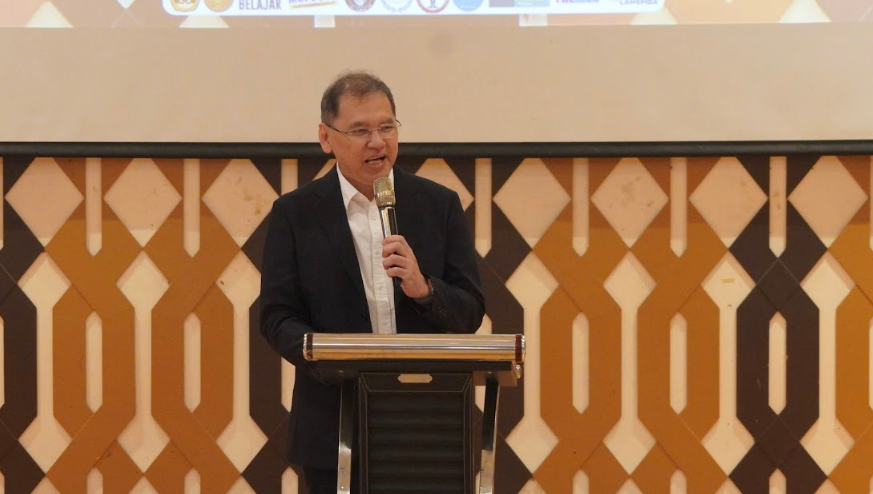
The Dean of FEB Unpad, Prof. Mohamad Fahmi, S.E., M.T., Ph.D., emphasized in his remarks that this momentum represents an acceleration phase toward higher service standards.
The Faculty of Economics and Business (FEB) Unpad is currently in the intensive verification and finalization phase of supporting documents as part of the evaluation process leading up to the WBBM (World Banking Forum), with a submission target of early March 2026.
“This strengthens the foundation we have already built. Our focus is not only on complete documents, but also on consistent, professional, fast, and accountable service practices,” he said.
On this occasion, the roadmap for the development of the FEB Unpad Integrity Zone was presented interactively through a digital presentation platform. The roadmap includes stages for improving service processes, strengthening internal control systems, and integrating technology-based services to increase transparency and responsiveness.
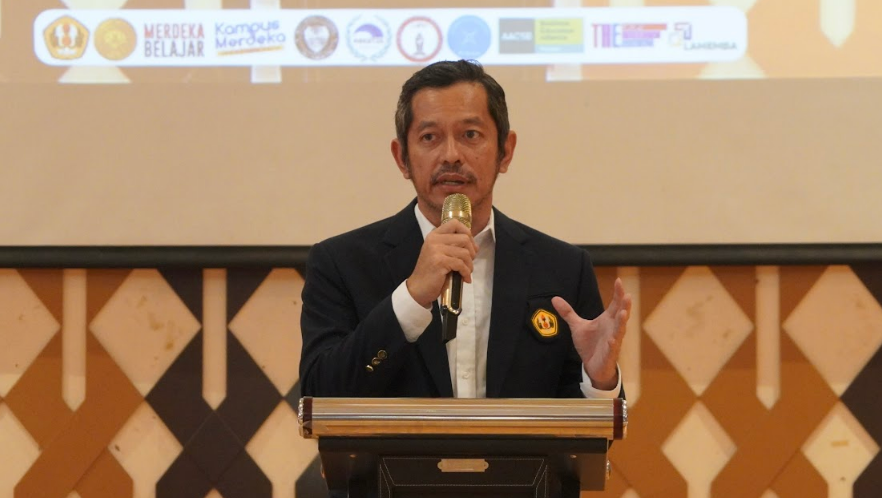
The Rector of Padjadjaran University, Prof. Dr. Arief Sjamsulaksan Kartasasmita, Sp.M(K)., M.Kes., Ph.D., emphasized in his keynote speech that clean governance is the foundation of world-class education. He stated that academic quality does not stand alone but is supported by an effective and service-oriented administrative system.
He also stated that the strengthening of the Integrity Zone at FEB Unpad reflects the institution’s commitment to building an accountable and service-oriented system.
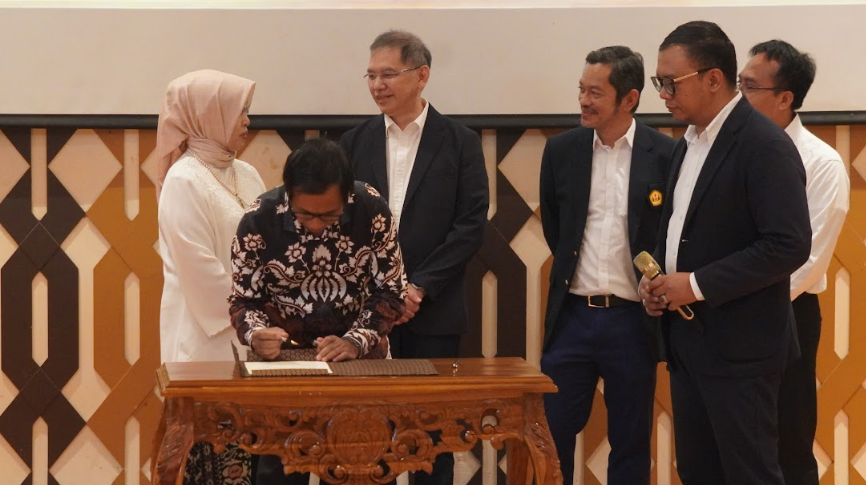
As part of this commitment, the Dean of the Faculty of Economics and Business (FEB) Unpad signed an Integrity Pact, witnessed by the Rector of Unpad. This ceremony symbolized the strengthening of an integrity-based work culture within the faculty. The series of activities also marked the launch of the FEB Unpad digital reporting service system, which allows for more transparent and documented process monitoring.
By strengthening the Integrity Zone towards WBBM, FEB Unpad affirms that bureaucratic reform is a continuous process that demands discipline, consistency, and a change in work culture. This step also strengthens FEB Unpad’s contribution to the Sustainable Development Goals, specifically SDG 16 on effective,
accountable, and transparent institutions, SDG 4 on quality education, and SDG 9 on innovation and strengthening digital service infrastructure. Integrity is positioned as a key foundation for delivering higher education that is globally competitive and impactful for society.