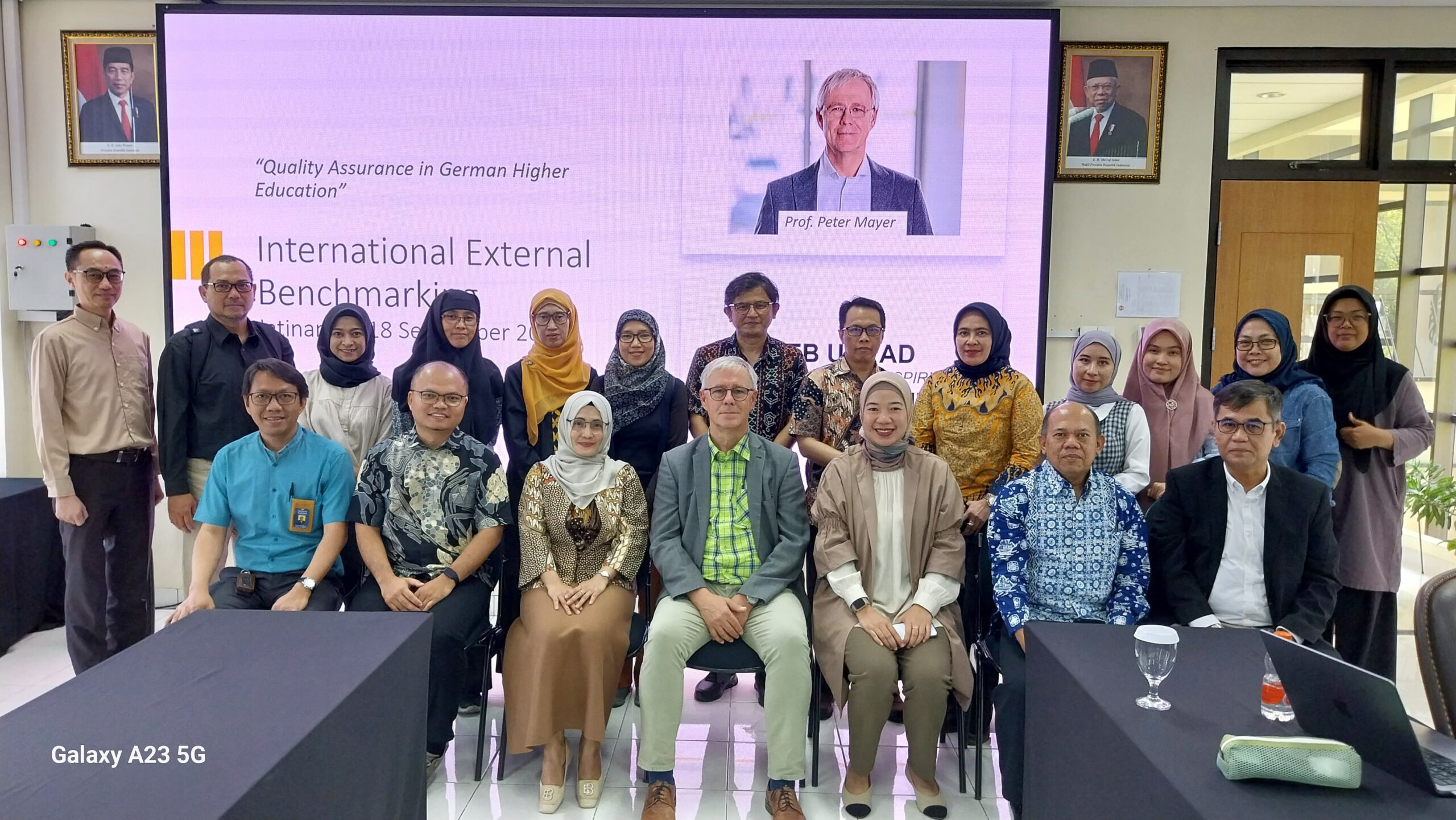
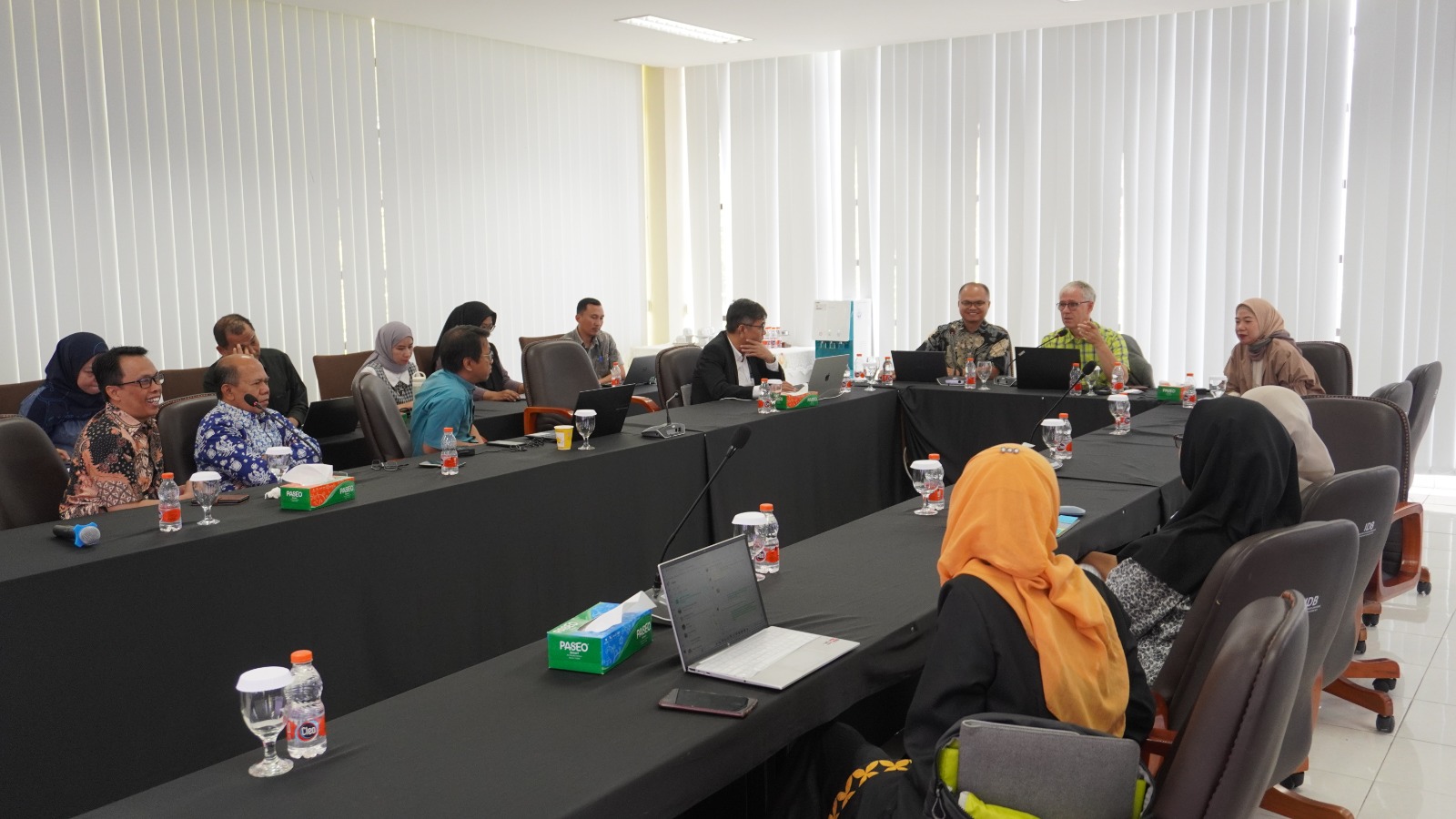
[Jatinangor, September 19, 2024] The Quality Assurance Unit (UPM) of the Faculty of Economics and Business, Padjadjaran University (FEB Unpad) held an International External Benchmarking, in the Alpha Meeting Room, LEAD Building, FEB Unpad, Wednesday (18/9/2024). The event entitled “Quality Assurance in German Higher Education” presented Prof. Dr. Peter Meyer from the University of Applied Sciences Osnabruck who is also the founder of the International Deans’ Course (IDC) DAAD as the main speaker.
The activity was attended by a number of internal FEB Unpad administrators, including vice deans, managers, heads of study programs, heads of quality assurance units, heads of internationalization units, and the FEB Unpad quality control group team. In addition, UPM FEB Unpad also invited fellow quality guards in the university environment, including the head of the Unpad Quality Assurance Unit (SPM), as well as the Heads of UPMs in the Unpad environment.
Vice Dean II of FEB Unpad, Dina Sartika, Ph.D., said that the International External Benchmarking activity is an annual routine activity of the FEB Unpad Quality Assurance Unit. The activity aims to always make improvements and enhancements in the quality aspect at FEB Unpad. “This event is expected to provide in-depth insight for participants in understanding quality assurance strategies and the role of rankings in improving the reputation and quality of higher education at the global level,” she said at the opening.
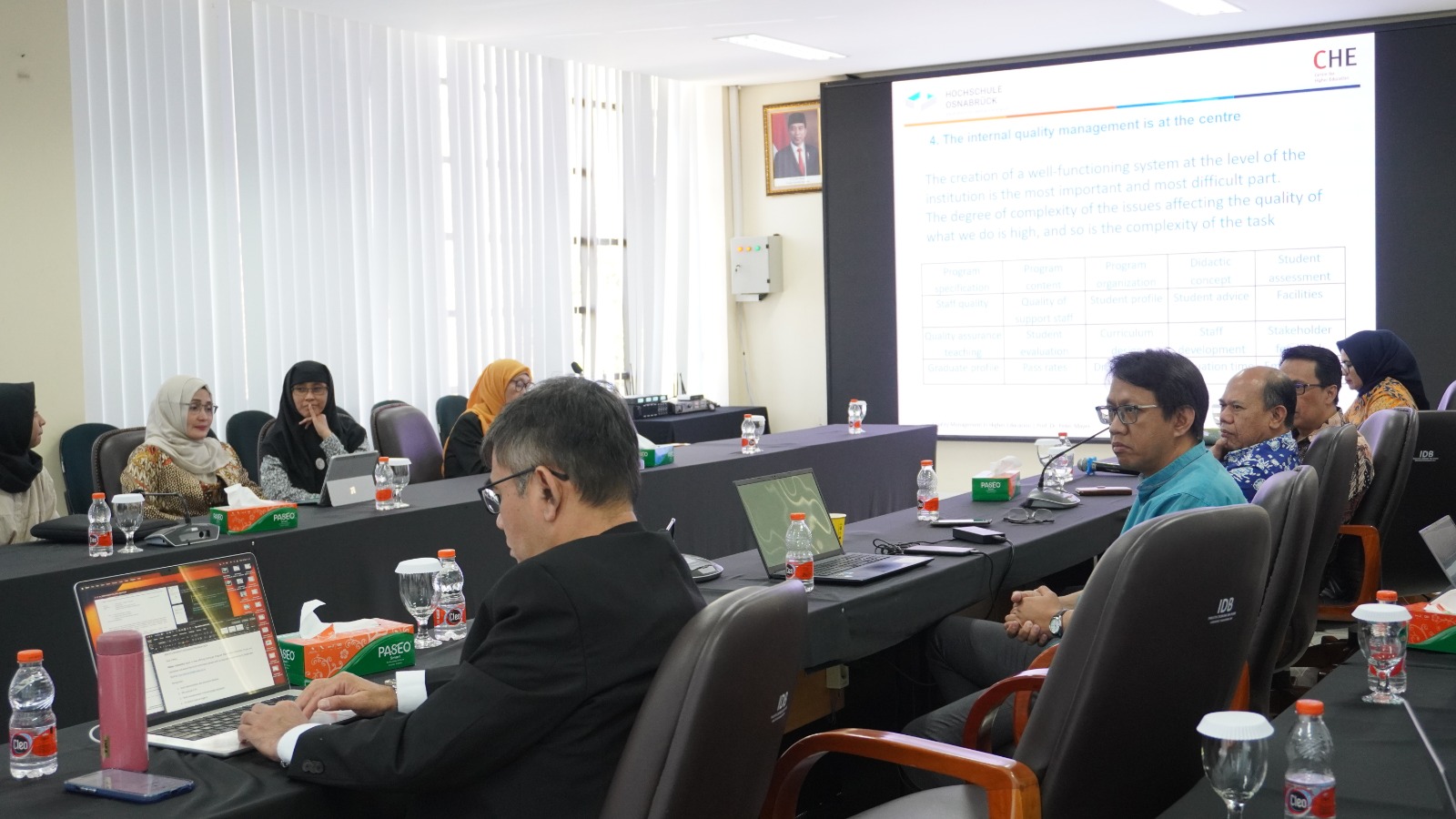
Prof. Dr. Peter Meyer in his presentation discussed various important aspects in quality assurance of higher education, especially in Germany. Several main points to be discussed include the concept of quality that explains the complexity and various perspectives of quality in higher education, dimensions of quality management that describe how various dimensions play a role in quality management, and the quality framework in higher education implemented in Germany. In addition, he also highlighted the importance of internal quality assurance, the development of a quality culture in higher education, and the important role of higher education rankings in the global landscape of education.
Several important lessons can be taken from the presentation. These important lessons: first, include the understanding that quality is a complex phenomenon with various dimensions and perspectives that require a holistic approach. Second, external and internal quality management should be seen as two complementary sides to achieve success in higher education.
Third, involvement in external quality assurance institutions can also provide important insights for improving institutional quality. Fourth, each university needs to adjust its internal quality assurance system to the specific characteristics of its respective institutions, and develop a strong quality culture. Fifth, although university rankings are often controversial, they remain an important factor in improving the reputation and quality of higher education at the international level.
The Head of UPM FEB Unpad, Budi Harsanto, PhD, explained that internal quality benchmarking is a routine agenda at FEB Unpad. Last year, FEB Unpad invited a resource person from Universiti Malaya, Malaysia, who focused on discussing the integration of KPIs to align with international rankings. This year, they invited a resource person from HS Osnabrück, Germany, who is also a higher education management expert from DAAD, to share insights on quality assurance in German universities. (***)