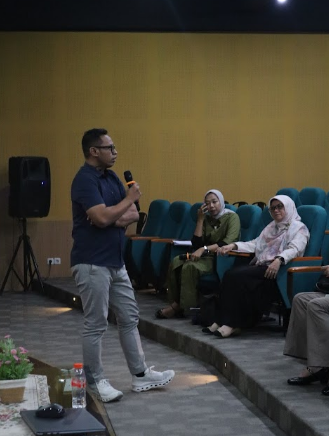
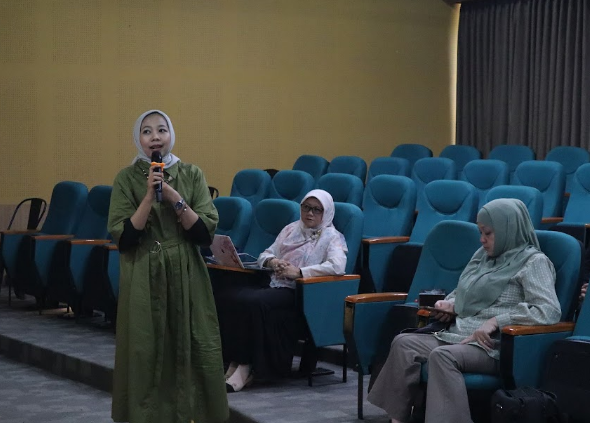
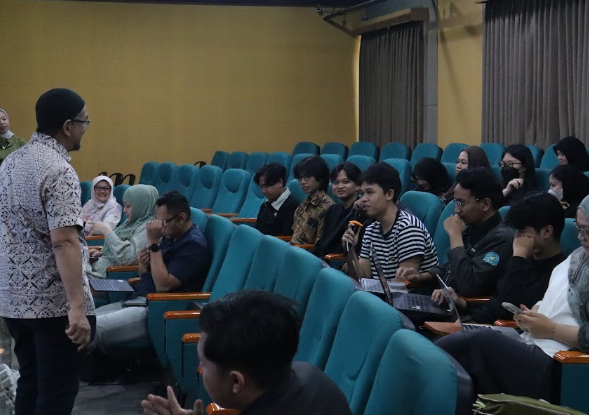
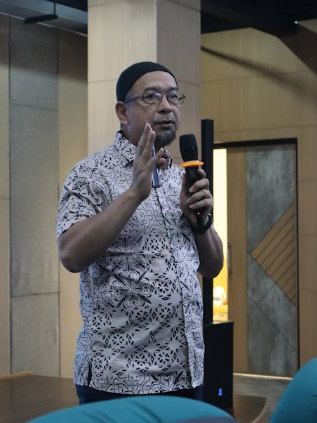
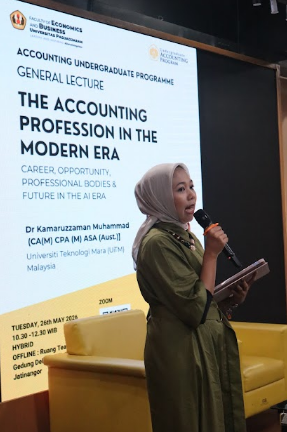
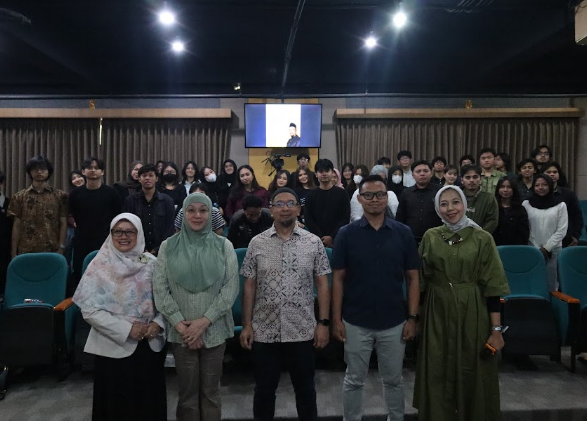
On Tuesday, May 26, 2026, the Faculty of Economics and Business at Universitas Padjadjaran organized an academic event entitled “Overview of the Accounting Profession in the Modern Era.” The event was attended by students of the Accounting Study Program and was conducted as part of the general lecture series for the Auditing I course under the theme “Audit Profession.”
The event involved approximately four classes and was held in a hybrid format, combining both online and offline participation. The session featured Assoc. Prof. Dr. Kamaruzzaman Muhammad as the keynote speaker and was moderated by Saskia Salmana Dahyar , S.E., M.Sc. one of the lecturers at the Faculty of Economics and Business, Universitas Padjadjaran.
In his opening remarks, Assoc. Prof. Dr. Kamaruzzaman Muhammad stated that in today’s modern era, the accounting profession is no longer limited to merely recording financial transactions and preparing reports. Accountants are now required to possess analytical skills, technological literacy, and a strategic mindset to support decision making in the business world. The accounting profession also offers a wide range of career opportunities, including auditors, tax consultants, financial analysts, management accountants, forensic accountants, and sustainability reporting specialists.
He also emphasized that after completing education, every individual needs to have a clear vision and goals for their future career. Whether aspiring to be an accountant, tax consultant, or auditor, strong determination, a professional attitude, and a commitment to continuous self-development are required to achieve success and remain relevant amidst changing times.
Saskia Salmana Dahyar ,S.E., M.Sc. also explained that individuals who aspire to become professional accountants are not only expected to possess strong academic qualifications, but are also required to meet the applicable standards of professional competence and ethics. A professional accountant is expected to obtain official certification as formal recognition of their expertise and competency in the field of accounting. Such certification is achieved through several requirements, including completing relevant educational programs, passing professional certification examinations, and obtaining the necessary work experience in accordance with the regulations and standards applied in Indonesia.
In Indonesia, the standards and development of the accounting profession are supervised by Ikatan Akuntan Indonesia (IAI). Through this organization, aspiring professional accountants may participate in various certification programs, such as the Chartered Accountant (CA) qualification, which is designed to ensure that accountants uphold competence, integrity, and professionalism in accordance with both national and international standards.
In his closing statement, Assoc. Prof. Dr. Kamaruzzaman Muhammad revealed that the current development of Artificial Intelligence (AI) is having a significant impact on the accounting profession. AI can assist accountants in completing various routine and repetitive tasks, such as data entry, transaction recording, financial analysis, audit processes, fraud detection, and tax calculations more quickly, efficiently, and accurately. With this technology, accountants can focus more on responsibilities with higher strategic value, such as business decision-making, consulting services, risk management, and financial planning.
He also explained that the development of AI has opened up various new career opportunities in the accounting field, such as data analysis, digital auditing, forensic accounting, and financial technology (FinTech). However, while AI offers many conveniences and support for the accounting profession, it cannot completely replace the role of human accountants. Professional judgment, ethics, communication skills, leadership, and critical thinking remain crucial aspects that can only be possessed and optimally implemented by humans.